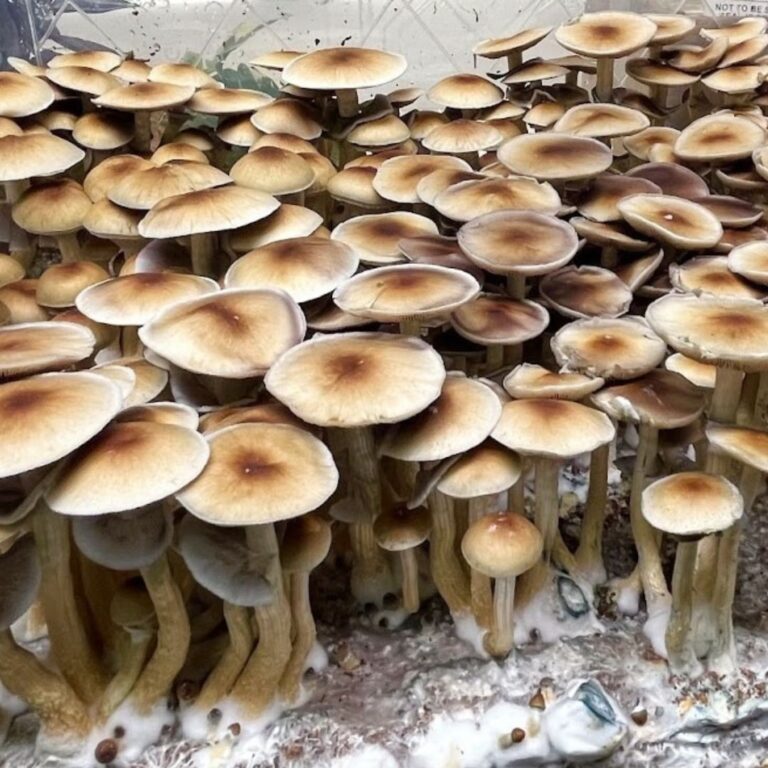
Welcome, curious minds and mushroom enthusiasts! Today, we’re diving into the fascinating world of the Golden Teacher mushroom, a standout strain of Psilocybe cubensis that’s been schooling mycologists and adventurers alike for decades. Whether you’re here to learn about its origins, marvel at its golden good looks, or geek out over its spores, this article has you covered. Buckle up for a trip through history, science, and a sprinkle of fungal wit—because who said mushrooms can’t be fun?
Origins of the Golden Teacher Mushroom: A Mysterious Syllabus
Let’s kick things off with a question: where did this golden guru come from? The Golden Teacher mushroom’s origin story is a bit like a psychedelic whodunit—intriguing, hazy, and full of speculation. While its exact birthplace remains shrouded in mystery, most experts agree it likely emerged in the wilds of the southeastern United States, possibly Florida, during the 1980s. Unlike some fungi with well-documented discovery tales, Golden Teacher seems to have popped up in cultivation circles almost out of nowhere, earning its name and fame through word of mouth.
Rumor has it that the strain was first isolated by amateur mycologists who noticed its unique traits—namely, its enlightening effects and distinctive appearance. Its moniker, “Golden Teacher,” is thought to reflect both its golden-hued cap and the profound, introspective experiences it’s said to impart. No ancient texts or tribal legends here—just a modern marvel that’s become a staple in the Psilocybe cubensis family.
Appearance: The classic gold cap Mushroom
If mushrooms had a beauty pageant, Golden Teacher would be strutting its stuff with confidence. This Psilocybe cubensis variant is a visual stunner, and its appearance is a key reason it’s so recognizable. Here’s the rundown:

- Cap: The star of the show is its cap, which starts as a small, convex dome and flattens out as it matures, often reaching 2–5 inches in diameter. Young caps sport a rich golden-yellow hue—hence the name—that fades to a lighter tan or pale gold with age. It’s like the mushroom version of a sun-kissed tan!
- Gills: Peek underneath, and you’ll find gills that transition from pale grayish-white to a deep purple-brown as spores develop. They’re tightly packed, like students cramming for a fungal final exam.
- Stem: The stem is sturdy, white, and often slightly yellowish near the top, stretching 4–6 inches tall. It’s thick enough to stand proud but slender enough to keep things elegant.
- Veil: A delicate partial veil covers the gills in youth, tearing away to leave a faint ring or skirt around the stem—think of it as the mushroom’s graduation tassel.
What sets Golden Teacher apart from other P. cubensis strains? That radiant cap and its tendency to grow larger than some of its cousins.
Spores and Growth
Now, let’s get into the nitty-gritty of Golden Teacher spores and growth—because this mushroom isn’t just a pretty face; it’s a prolific little educator too. Spores are the microscopic magic behind fungal reproduction, and Golden Teacher delivers them with style.
- Spore Color: The spores are a dark purple-brown, typical of Psilocybe cubensis. When you make a spore print (a mycologist’s version of a fingerprint), you’ll see a rich, inky hue that’s perfect for identification—or just admiring under a microscope.
- Spore Size: These tiny travelers measure about 11–17 micrometers long, making them standard for the species but packed with potential. Each spore is a lesson in resilience, ready to germinate under the right conditions.
- Growth Characteristics: Golden Teacher is a favorite among cultivators for its adaptability and vigor. It thrives on common substrates like brown rice flour, manure, or coir, and prefers warm, humid environments—think 75–85°F with plenty of moisture.
Beyond the Basics: What Makes Golden Teacher Stand Out?
So, what else should you know about this P. cubensis variant? Plenty! Golden Teacher isn’t just about looks or growth—it’s got personality and a bit of cultural cachet too. Here are some extra credit facts:
- Cultural Significance: While it lacks deep historical roots, Golden Teacher has carved out a niche in modern psychedelic culture. Users often praise its balanced effects—less intense than some strains but still profound—making it a go-to for those seeking clarity rather than chaos. It’s the fungal equivalent of a wise, patient mentor.
- Unique Properties: Beyond its aesthetics, Golden Teacher is known for producing larger-than-average fruiting bodies compared to other P. cubensis strains. Some cultivators swear it’s more resilient to contamination too, though that’s more anecdote than science.
- Fun Fact: Ever wonder why it’s not called “Golden Professor”? Maybe “Teacher” just sounded humbler—or perhaps it’s a nod to its hands-on approach to enlightenment. Either way, it’s a name that sticks.
For those typing “Golden Teacher mushroom facts” into search bars, here’s a gem: this strain’s versatility and charm have made it a darling of both hobbyists and researchers. It’s not just a mushroom; it’s a lesson in fungal finesse.
A Word of Caution: The Legal Ledger
Before you get too excited about tracking down Golden Teacher spores or starting your own mushroom academy, a quick disclaimer: Psilocybe cubensis, including Golden Teacher, contains psilocybin, a compound that’s illegal in many parts of the world, including most of the United States (outside specific research or decriminalized areas). This article is purely informational—think of it as a biology lecture, not a how-to guide. Always check your local laws before engaging with psychedelic fungi. If you are in a state that permits the study of these mushrooms, you can buy Golden Teacher Research genetics for microscopy here. Safety first, folks!
Conclusion: Your Golden Takeaway
The Golden Teacher mushroom is more than just a pretty cap in the Psilocybe cubensis lineup—it’s a strain with origins steeped in modern mystery, a striking appearance that lives up to its name, and spores that make it a cultivator’s dream. From its golden glow to its teachable growth habits, it’s a fungal phenomenon that’s earned its spot in the spotlight. Whether you’re a mycology newbie or a seasoned spore-spotter, there’s something here to pique your interest.
Want to dig deeper? Share your thoughts in the comments, pass this article along to your fellow fungi fans, or explore more mushroom marvels online. For vivid visuals of Golden Teacher, a quick search for reputable mycology sites or forums will yield plenty of eye candy. Until next time, keep learning—and let the Golden Teacher guide your curiosity!